Vous vous demandez à quoi ressemblent des cours pour des élèves avancés ? J’ai décidé que la meilleure manière de raconter cela, serait de faire parler un de mes élèves avancé. Voici notre conversation en anglais.
Introduction
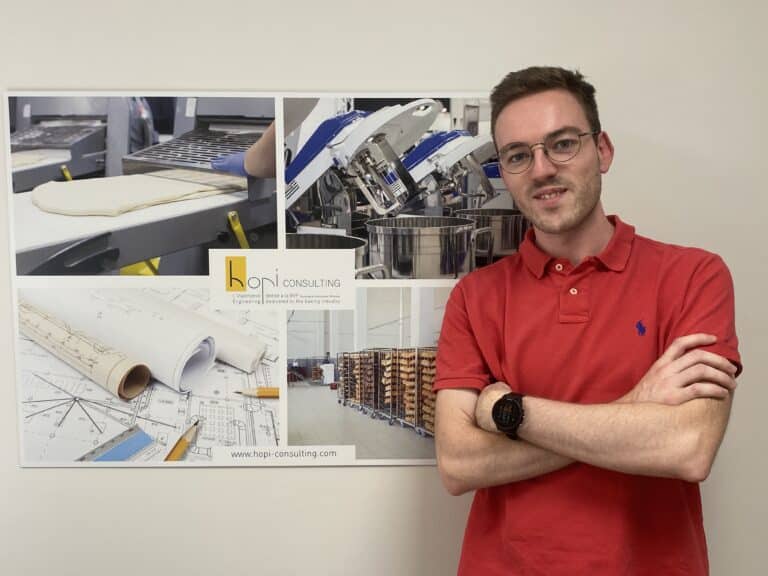
Valentin is an advanced student that I’ve worked with for several years. He is an engineer and project manager for Hopi Consulting. Lessons are every two weeks and always on Teams. We’ve worked on many things during our time together. Some of the things we’ve focused on are:
– Technical vocabulary to describe industrial processes
– Presenting himself and the company at conferences and meetings with potential clients
– Intermediate and Advanced grammar points and implementing them speech
– Spontaneous speaking on unexpected topics
– Refining email communication and technical writing
– Developing ability and confidence in diverse speaking contexts: with CEOs, engineers, suppliers, and clients; at meetings, international conferences, phone calls, and more
– Adapting communication to different individuals and audiences
Here is our conversation:
Phillip: Thank you for making the time to come chat with me outside of our lesson. Tell me a little bit about your company and your job.
Valentin: So my name is Valentin Kerebel. I’m 30 years old. I’m working as a project manager here at Hopi Consulting. We are a company dedicated to the field of the baking industry. So, in other words, we create some factories to produce, for example, bread or pizza, in France, but also all around the world. And because in our daily work, this is a need to know how to speak English, because you are always exchanging with suppliers or customers. And it’s very important to have a really good level, professional level, in English.
Phillip: Yeah. How often do you use English in your job? Is it every week?
Valentin: Depending on the projects, of course, because if it’s in France, of course, we’re using French. But yeah, most of the time, each week, we have some Teams meetings, for example, to review layouts in English, or maybe to write an email to a customer to ask for data or things. So weekly, I will say.
Phillip: Weekly, okay. We’ve worked together for, I think, about three years now, maybe a little bit more. How was your English level before you started working with me?
Valentin: I would say student English level. So I think I had the B1, something like that. Not C, but B for sure. Or B2, I don’t know. I don’t remember.
Phillip: I would say more like B2. You were relatively strong before you came to me. But how did you get to this level? Was it just watching series and studying in school? Or how did you arrive at B2?
Valentin: I would say, I had stronger grammarwhen I was young. So I had a solid base, let’s say. And then when I arrived to university, I started watching series. And I took, I guess, about three or four points on my notes at school. So it was a game changer for me to watch series. And also listened to music, because I was also into music. When you need to dig on the internet for some special techniques for making music and all the explanations, the examples or the teachers are not French, so you need to know how to speak English.
Phillip: Are there any series you’d recommend for people starting to watch TV in English?
Valentin: I recommend simple series. This is kind of complicated to start by Game of Thrones. There are many characters, many small lines, small details. I’ve watched The Walking Dead. This is an old-fashioned series, but it was with zombies. It was very easy to understand the sentences.
Phillip: I could describe what we usually do in our lessons, but I think my readers would prefer to hear it from you. Can you describe what we generally do in our lessons?
Valentin: Most of the time, at the beginning of each lesson, there is a small talking, I would say, like for five or ten minutes. And then we move on to exercises, depending on what we want to improve. And this is really specific about our needs or your recommendation to maybe get stronger in a Teams meeting, with some, live exercises—
Phillip: Role plays…
Valentin: Exactly, yeah.
Phillip: What are the things that we’ve worked on that have helped you perform in your job?
Valentin: I would say, like, the go-to tools, maybe for a Teams meeting: to know how to begin a Teams meeting, how to present the company – short version, long version, and all the role plays as a customer, as a supplier. All these exercises help me a lot. And then it’s just the consistency, because we’re seeing each other every two weeks, almost. And to keep practicing English each two weeks, it’s very important instead of having, like, four hours’ lesson each month. It’s way better to keep practicing English each two weeks.
Phillip: Yeah. Well, that leads me to a different question. How do you maintain English when you don’t use it regularly? If you have three months where you don’t really use English, how do you maintain it? Or how do you come back to it after a long break?
Valentin: You have to maybe rereadsome articles in English, maybe on social networks in your feed. I have some articles or some music launch by your favorite artist or something like that. Maybe a movie at some point. You have to pay attention to the lyrics of the song came on the radio, in the car. There’s many ways to dig again in English when you forget it for a few weeks.
Phillip: In general, not concerning our lessons, what is the most difficult thing in English for you? Is it just constructing sentences on the fly? Is it technical vocabulary? Is it, I don’t know, speaking spontaneously?
Valentin: Yeah, maybe the third one: to have a good flow in any new situation. Because I know that I have some strong basis to, but to use standard grammar, to know some sentences, maybe some expressions also, but to have it ready in your mind, that we need to stay on the floor on the board, in every situation. This is sometimes challenging, so that’s why it’s very important to practice.
Phillip: Do you ever freeze in an important moment in English?
Valentin: Sometimes I’m struggling to find some words. I need to stop, have a little break and think, okay, can I remember the exact word? Yes or no? If no, can I find a way to explain the word, or maybe to use another word?
Phillip: Yeah, absolutely. So the things we’ve done together have gone beyond just studying English, like traditional grammar and vocabulary. Some of the things we’ve done include working on communication style, changing your communication to different people, different contexts. Can you tell me a little bit about the different ways that you communicate? You’ve sometimes described yourself as a chameleon. Could you describe that a bit?
Valentin: Yeah, I have the ability or capacity to adapt to any situation because, due to my job, we’re facing some top CEOs, and the next day, we’re exchanging with some line operators. And you have to adapt your language. You have to adapt your communication because when you’re talking about millions-euros projects to a top CEO Monday morning and then Monday afternoon, you’re now visiting a factory and you have to exchange with line operators to know if they are struggling to use the machine or if there is some ergonomic problem on the line. You have to adapt your communication, yeah.
Phillip: Yeah. Do you have any suggestions for the people that need to do that in their lives in English? How have you gotten better at this?
Valentin: I think you have to be a good listener to know the, let’s say, the standard, the common rules, depending on situations. And you need to listen how the CEO talks, how the operators are talking, you know, at their level. I think you have to observe your environment, know about the good manners to let yourself get into the situation.
Phillip: Yeah, excellent answer. Do you have any advice for other people that would like to improve theirEnglish and professional context?
Valentin: I think an easy thing to do is to maybe have some, for emails, for example, to have like a template that you can use. A really simple one, but working one. So this is very helpful when you sometimes struggle to type your emails. And also maybe to have some sentences to ice-break a situation during a meeting, for example, at the beginning.
Phillip: Describe that. What is an example of an icebreaker, for people who have never heard of it?
Valentin: If you’re beginning a technical meeting when you need to review layout but maybe you don’t know all the audience, a simple way to ice-break the meeting is to ask simple questions. How’s the business today? Simple questions. Do you have many projects to do now? Or how is the business in, I don’t know, Africa? Or do you remember maybe a project that we shared in the past? Do you have some news about the customer? Is the line running well?
Phillip: Yeah, or Just the weather.
Valentin: The weather, yeah, exactly.
Phillip: All right. Any other comments you’d like to make before we finish our conversation?
Valentin: It’s been three years that we’re working to improve my English, to keep me practicing English. And yeah, I think I’m really more confident with my professional English level. And this is a really strong thing that you can’t learn at school, and you need someone, I don’t know, in your family or a teacher to help you by practicing, keep you talking. So yeah, I really enjoyed those three years and I’m really glad that we’re continuing with our English lessons in the future.
Phillip: Yeah, me too. It’s always a good time. I enjoy talking to you. You always have interesting things to say. Thank you for your time, Valentin.
Cette article n’est que en anglais